Calculation
For this example: completion = costs to date ÷ estimated total cost; earned revenue = contract value × completion. Billing above earned revenue is overbilling; billing below it is underbilling. Keep the two positions separate.
Margin Max / Financial & operating control
Connect cost forecasts, earned revenue and billing before reviewing job margin.
Worked example · Fictional projects demonstrate cost-to-cost reporting mechanics. This schedule is an example, not a historical client result or a contract-specific accounting conclusion.
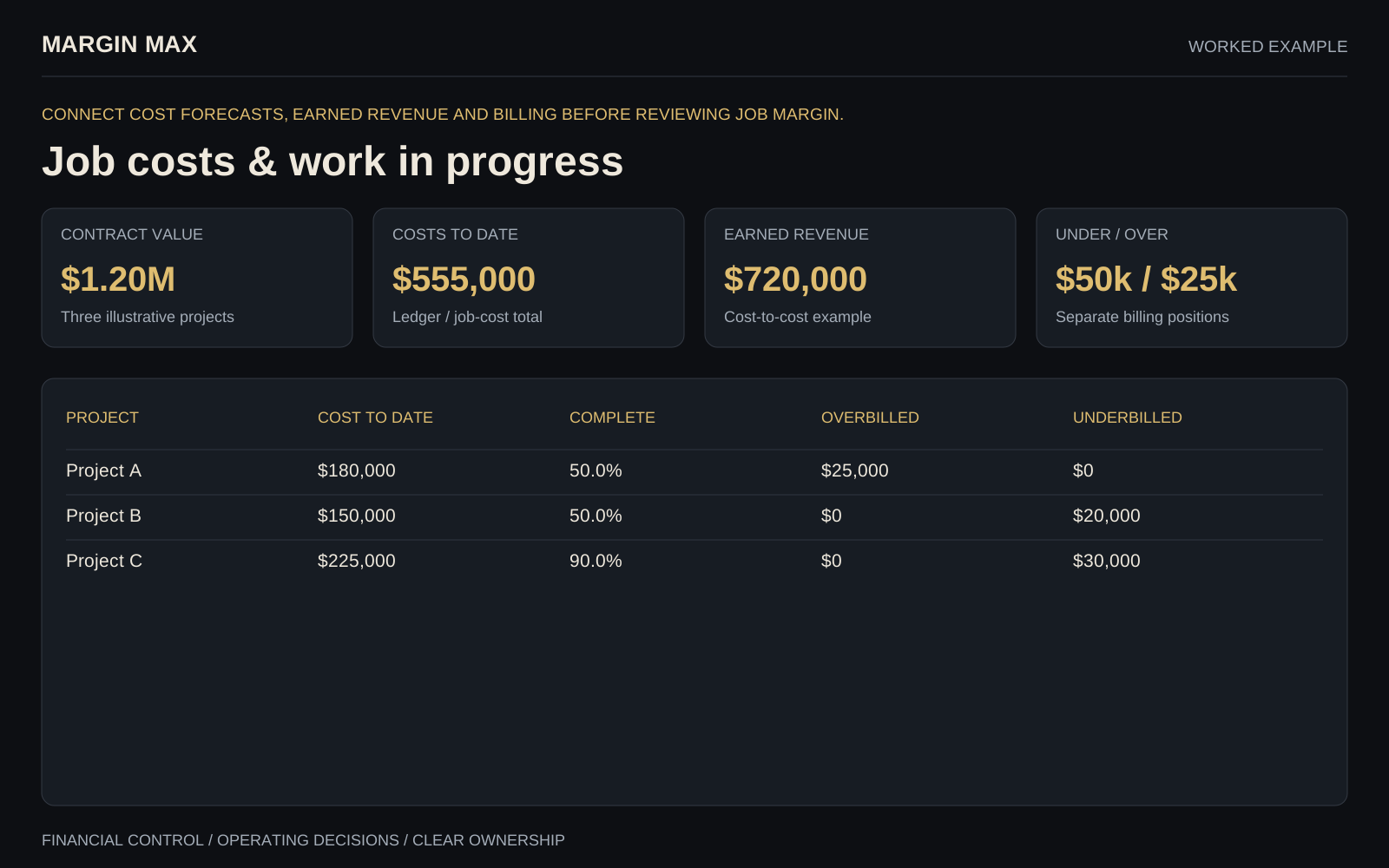
| Project | Contract | Cost to date | Est. total cost | Complete | Earned revenue | Billed | Overbilled | Underbilled | Est. final profit |
|---|---|---|---|---|---|---|---|---|---|
| Project A | $500,000 | $180,000 | $360,000 | 50.0% | $250,000 | $275,000 | $25,000 | $0 | $140,000 |
| Project B | $400,000 | $150,000 | $300,000 | 50.0% | $200,000 | $180,000 | $0 | $20,000 | $100,000 |
| Project C | $300,000 | $225,000 | $250,000 | 90.0% | $270,000 | $240,000 | $0 | $30,000 | $50,000 |
| Total | $1,200,000 | $555,000 | $910,000 | — | $720,000 | $695,000 | $25,000 | $50,000 | $290,000 |
For this example: completion = costs to date ÷ estimated total cost; earned revenue = contract value × completion. Billing above earned revenue is overbilling; billing below it is underbilling. Keep the two positions separate.
Validate remaining labor, materials, subcontract commitments and approved changes with project owners. Earned revenue less cost to date is $165,000 in this example; estimated final profit is $290,000. Review accounting treatment against the applicable contract and reporting policy.