Job costing & project margins
Review cost coding, job budgets, actuals and committed costs. Agree how labor, materials, subcontractors and overhead should appear in the reporting view.
Connect labor, materials and subcontractors to the job budget. Bring WIP, billing and collections into a financial picture the business can act on.
Defined projects or Controller support · Scope and fee agreed first
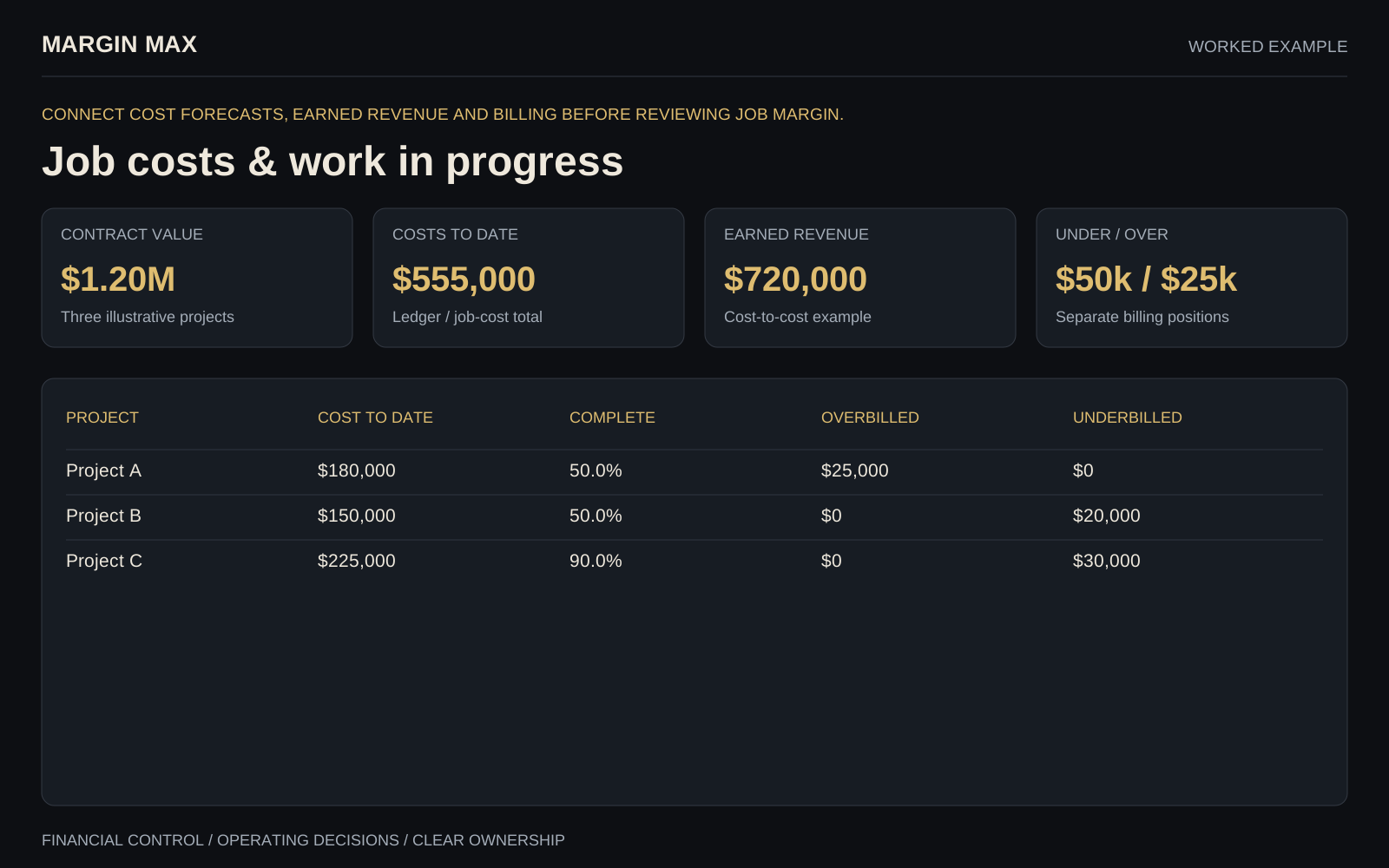
These examples show job-margin reporting and reconciliation checks. A WIP schedule is a separate deliverable built from your contract values, costs and completion assumptions.
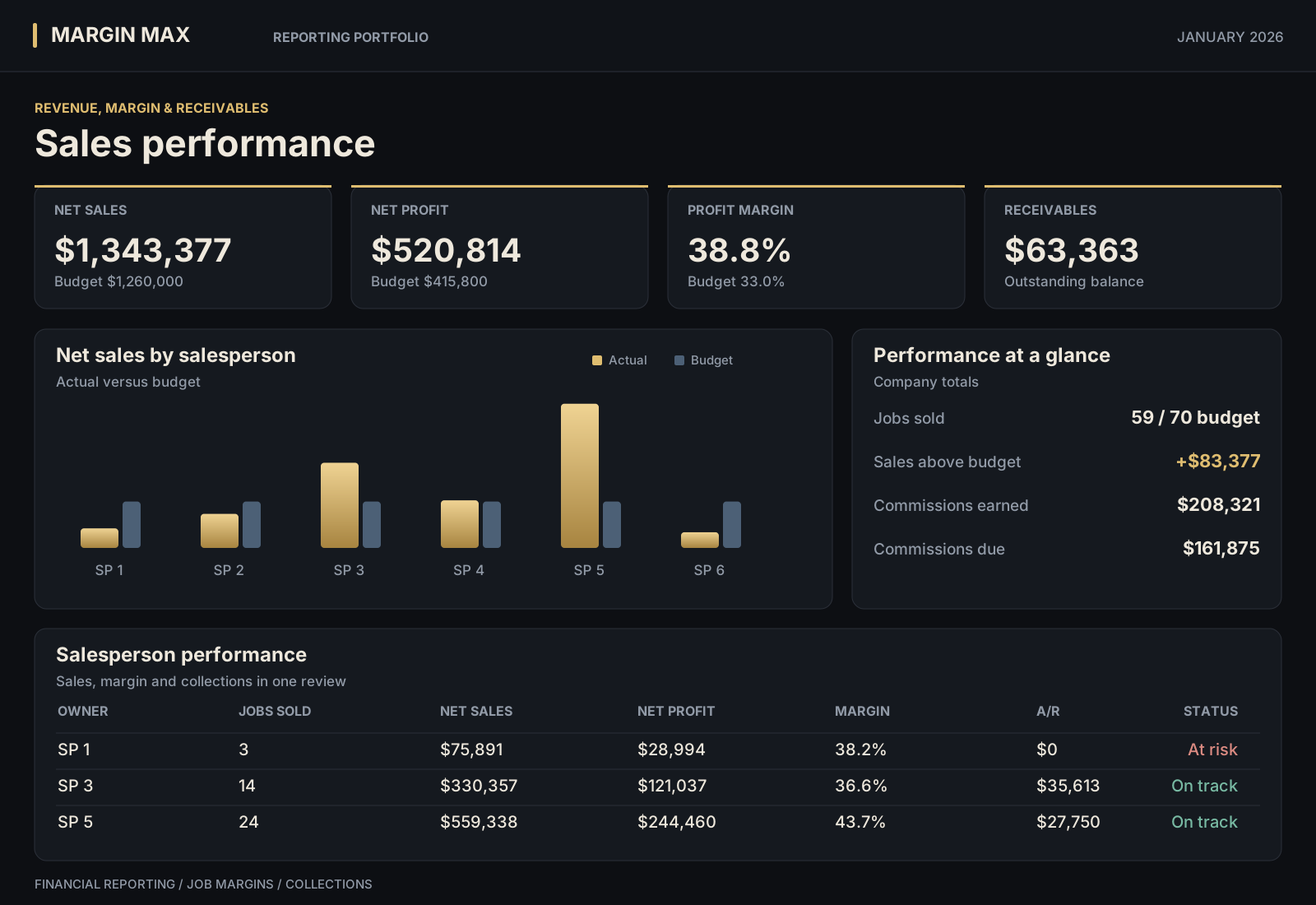
A reporting view connecting actuals, budget, job costs, profit, commissions and receivables.
Explore the full report ↗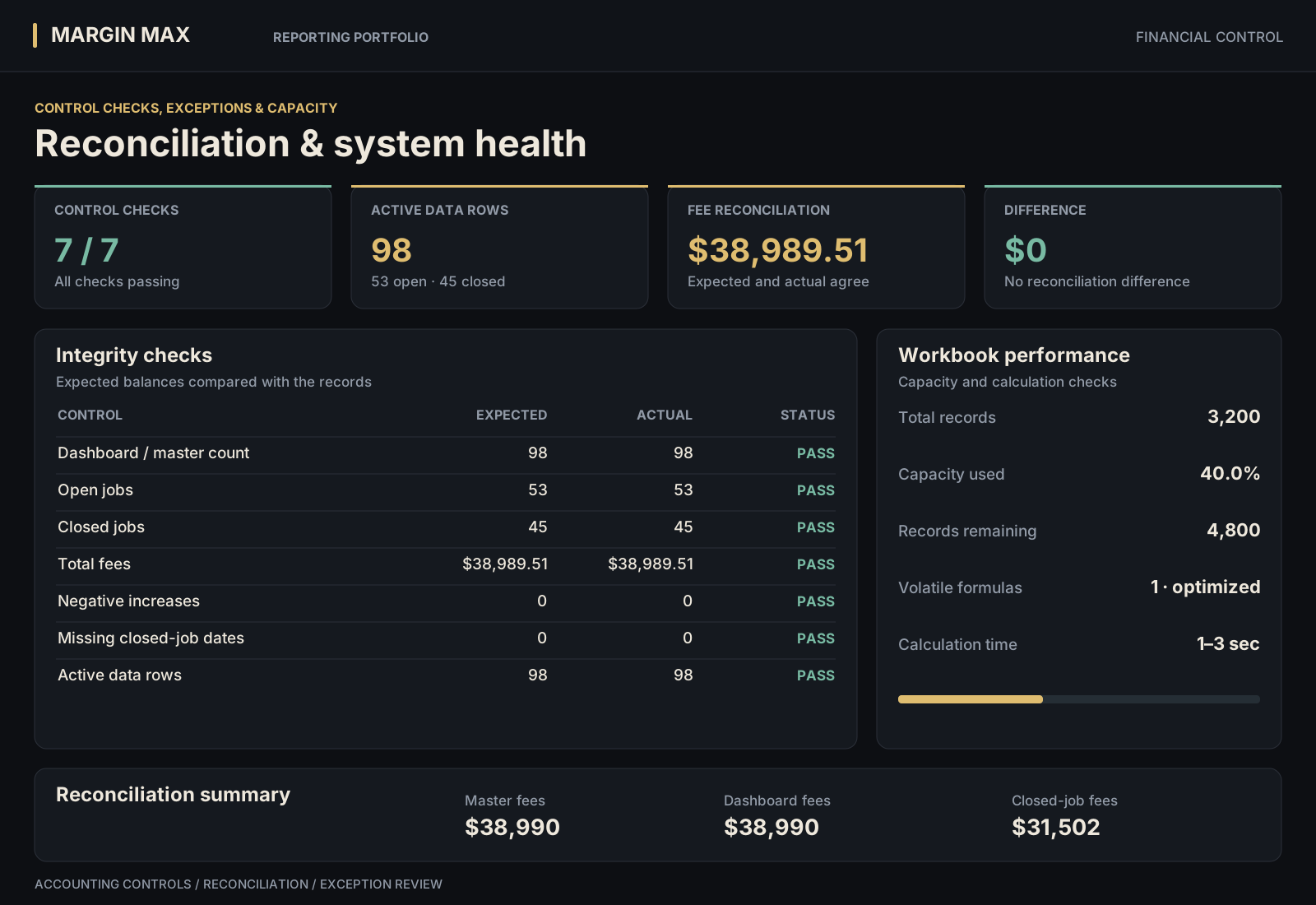
A control view checking record counts, fee totals, missing information and reconciliation differences.
Explore the full report ↗Review cost coding, job budgets, actuals and committed costs. Agree how labor, materials, subcontractors and overhead should appear in the reporting view.
Prepare work-in-progress and backlog reporting from agreed source records and assumptions. Document the review process and reconcile the reporting to the books.
Connect billing status, aging, follow-up responsibility and near-term cash requirements so the team can see where collections need attention.
Address late closes and unreconciled bank or balance-sheet accounts with a prioritized cleanup plan and a repeatable month-end process.
Support consistent financial records, intercompany review and consolidated management reports across agreed entities.
Build useful reporting packages, documented update procedures and scoped workflow improvements. Confirm the specific tools and data access before configuration.
Jeremy’s experience includes construction-company ownership, accounting infrastructure for construction and real estate, job costing, WIP reporting, daily bank reconciliations and AR controls.
A historical construction engagement reports more than $1.5 million in aged receivables recovered within 90 days. Results depend on the records, scope and operating context.
Read the documented engagement context →Start with your business type, number of entities, accounting and project systems, close backlog and the reporting question you need answered.
No financial files, customer details, account credentials or private project records are needed in the initial inquiry. Any later access and document transfer are agreed separately.
Start a construction accounting inquiry →Tell us what is late, unreliable or taking too much owner attention. A confidential introductory conversation helps establish fit; no diagnostic is required.
Confirm entities, systems, records, priorities, deliverables, review authority, fee and timing. Cleanup and ongoing leadership have different scopes.
Complete the agreed close, reconciliation, reporting or process work. Document outstanding issues, review responsibilities and what your team needs to maintain. Ongoing support is agreed separately.
Review contract value, costs to date, remaining commitments and forecast cost with project owners. Connect the WIP schedule to job-cost records and distinguish billing timing from job profitability.
Inspect the WIP example →